Aflaj Farmhouse
Location:
Qatar
Client:
Private
Built-up Area:
1835 sq.m
Scope:
Architecture, Landscape Design, and Interior Design
Status:
Confidential
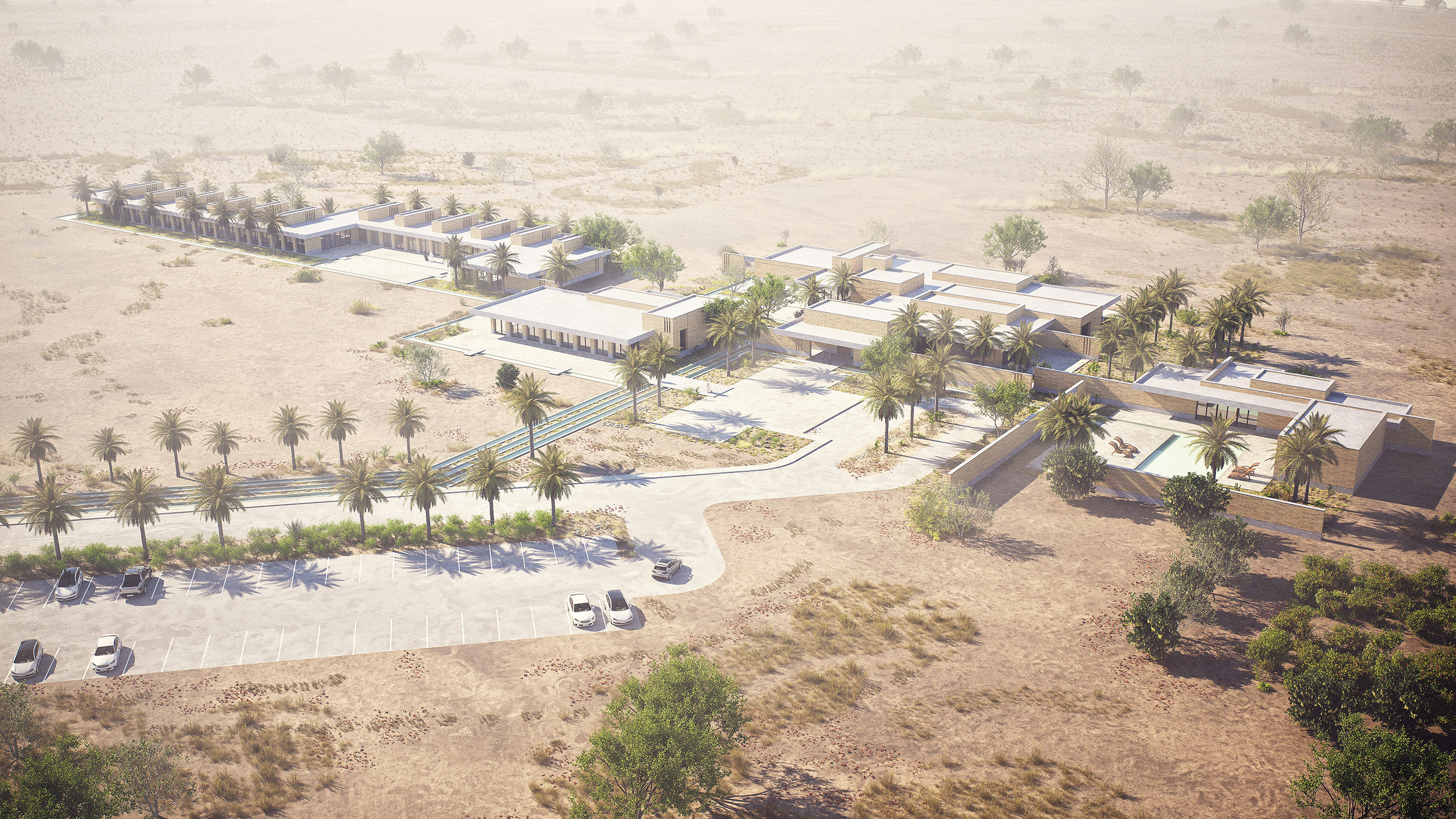
Located at the heart of a 150 hectare plot, the project consists of the development of a unique farmhouse for a distinguished client, along with auxiliary buildings such as gym and guesthouses.
Water / Aflaj. At the heart of any rawdah or meadow, there is water. It is the vital element that provides life under the scorching sun of the arid desert of Qatar. Traditionally, people have relied on the concept of Falaj, a millennia-old system of channels which draws water from a variety of sources, whether groundwater, natural spring water or surface water. While modern irrigation systems can provide extensive solutions for the development of cultivated lands, the Aflaj system provides more than just water. Over the years, it has shaped human settlement patterns and has been at the center of community cooperation, sustainable management of cultivated lands and water resources, and a core element within coherent cultural landscapes. The present Farmhouse project, with a main Farm Villa and three semi-independent buildings, namely the Majlis, the Gym, and the Guesthouse, is organized around a system of modern Aflaj. Three canals run from the main water corridor into the development and form the structuring grid of the layout of the buildings, and provide a natural and efficient cooling effect to the outdoor areas.
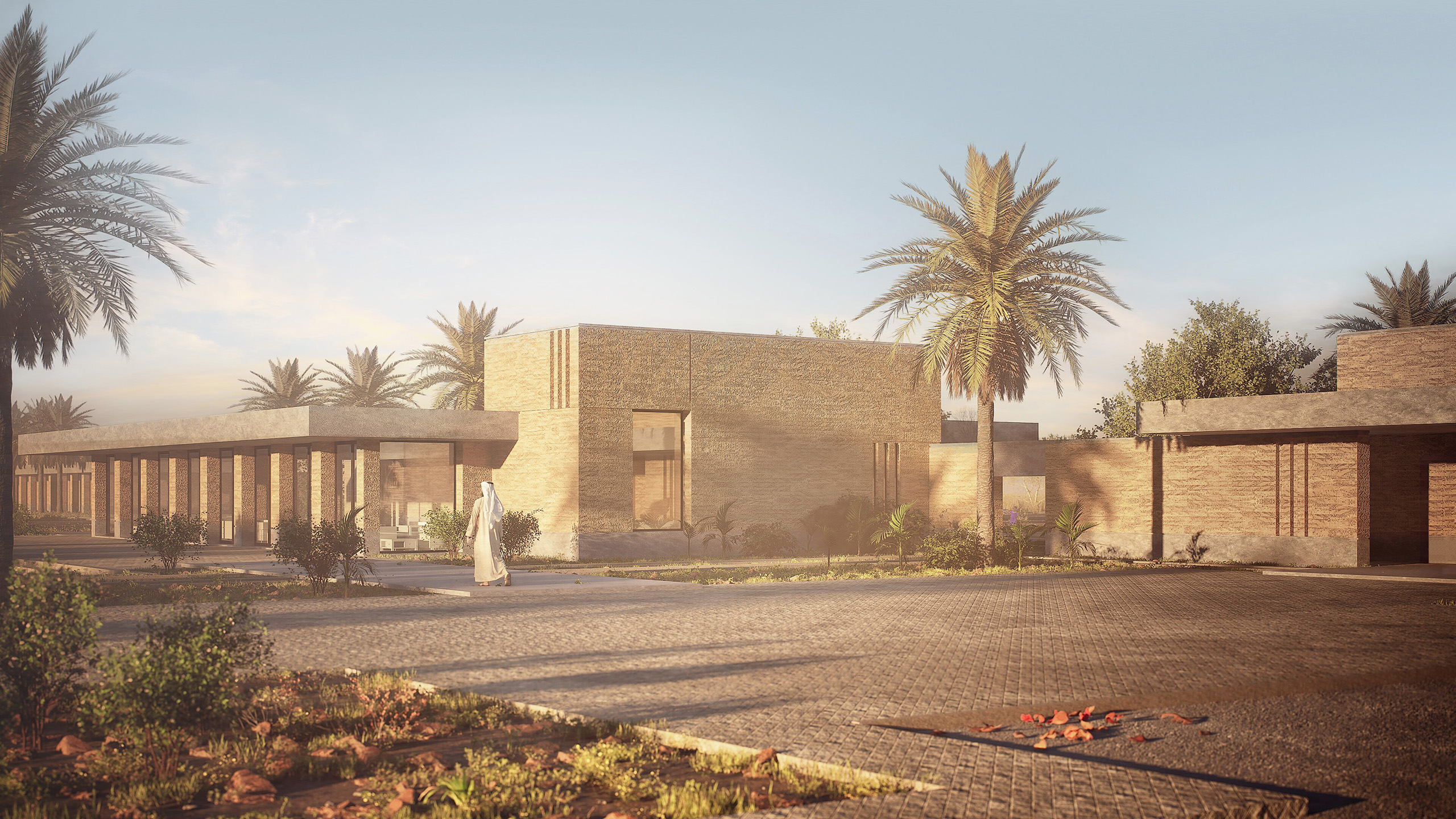
Wind & Sun. A Rawdah farmhouse is in many ways a retreat from the complexities of modern lifestyle. It is a secluded place that encourages a deep reconnection with nature and its most basic physical elements. It is a place of scarcity, where one can rediscover the value of the most simple things; such as the refreshing effect of a breeze during a hot summer day, the comfort of a tree shadow under a blinding sun, or the companionship of friends and family under a clear and starry night sky. The architecture of such a place should strive to preserve this simplicity. With its extensive overhanging canopies and large glazed walls, this clear and elegant design offers beautiful views of the surrounding Rawdah and invites nature inside.
Threshold & Privacy. As part of our on-going research on traditional built forms and its value in modern architecture, we focus deeply on the notion of “threshold” which is at the core of the socio-economic-cultural values that transpire through architecture. The transition between indoor and outdoor is a recurring central theme in traditional living spaces. This transition is rarely harsh; rather, it is a smooth experience where an individual prepares himself to enter or exit onto another space, one that is more public or private, more functional or comforting, more exposed to the outdoors or alternatively sheltered. Throughout this work, the layout of complex programs is carefully studied in the light of the juxtaposition of the various spaces and the sequencing of different functions, so as to reach the composition that feels most natural to the user. Indeed, we look for spontaneous transitions between the “private, semi private, semi-public and public” and between indoor and outdoor elements - through which we explore the quality of space, the meaning of the notion of identity, the sense of communal and social belonging, safety and privacy.
Earth / Rammed Walls. Rammed Earth walls construction is regaining popularity today due to its low environmental impact, its strength, its durability and its insulating properties. Rammed Earth construction is particularly suitable for harsh, humid and hot climates. The thick walls, with the high density of the material, protect interior spaces from the extreme weather conditions. Due to the high inertia of the thick walls, rammed earth buildings are cooler during summer and warmer in winter or during the night. In addition to thermal insulation, rammed earth provides excellent acoustic and structural properties. The material presents endless possibilities regarding color and textures that belong and blend very well with their natural context. This harmony brings calmness and helps the inhabitants reconnect with nature and earth. We propose the use of this versatile material as it can provide a unique avant-garde aesthetic to the Farmhouse, all the while emphasizing the sense of quietness and harmony with nature. With such a material, the Farmhouse would present itself as an exemplar for low-tech environmental building techniques that are subtly reminiscent of the traditional local architecture.